
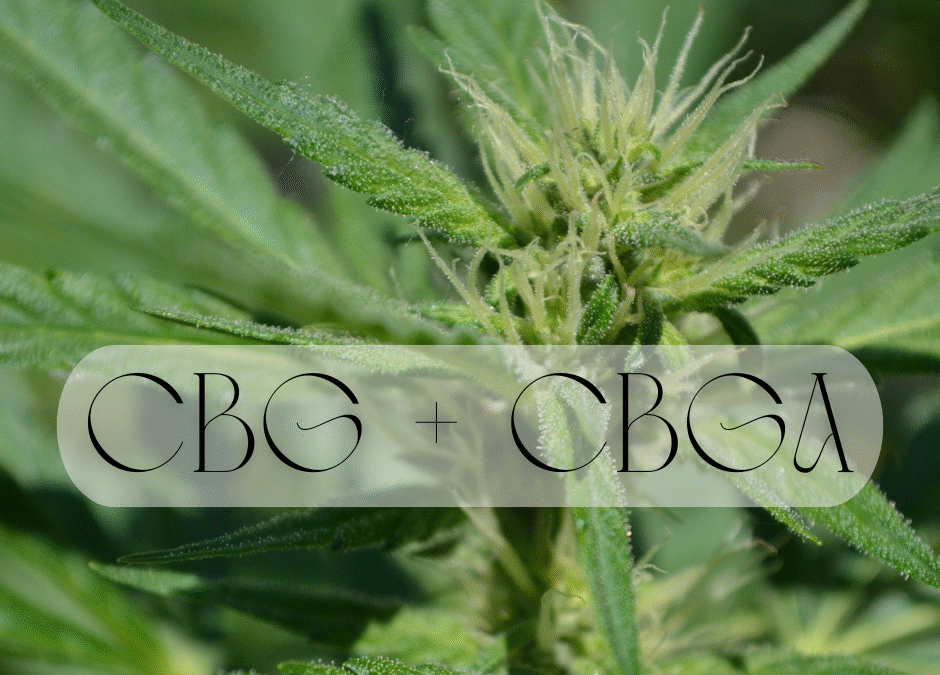
When we think of Cannabis, THC and CBD usually take center stage. But hidden beneath the surface are some of the plant’s most foundational compounds — ones that don’t get much attention, yet play a powerful role in how Cannabis supports our bodies.
CBG (cannabigerol) and its raw, unheated form CBGA (cannabigerolic acid) are often referred to as the “mother cannabinoids.” Without them, the others couldn’t exist. And while they don’t intoxicate, they offer their own spectrum of benefits — especially when used in their raw or minimally processed form.
What Are CBG and CBGA?
CBGA is the precursor to THC, CBD, and CBC — it’s the original molecule that gets converted as the Cannabis plant matures. Think of it like the stem cell of cannabinoids. As heat and time activate the plant, CBGA is enzymatically transformed into the others.
CBG, then, is what CBGA becomes when it’s decarboxylated (heated). It’s found in much smaller quantities in mature plants, which is why it’s sometimes called a “minor cannabinoid with major potential.”
But despite their low profile, both are becoming recognized for their wide-ranging therapeutic effects.
Benefits of CBG
CBG interacts with both CB1 and CB2 receptors in the endocannabinoid system — giving it a broad reach across the brain, immune system, gut, and nervous system.
Early research and anecdotal use suggest that CBG may:
- Reduce inflammation (especially in gut-related conditions like colitis and IBD)
- Support bladder and digestive health
- Enhance focus, clarity, and calm
- Act as a neuroprotectant
- Ease intraocular pressure (making it a potential glaucoma support)
- Provide antibacterial effects, especially against resistant strains like MRSA
- Support mood regulation and energy without sedation
CBG is non-intoxicating, and many people describe it as giving them “calm clarity” — focused, present, and grounded.
Why CBGA Matters (Raw & Radiant)
CBGA offers many of the same benefits as CBG but in its raw, unheated form. Like other acidic cannabinoids (CBDA, THCA), CBGA is non-psychoactive and ideal for those who want to support their health without altering their state of mind.
Early evidence suggests CBGA may:
- Regulate metabolism and blood sugar
- Support cardiovascular health
- Reduce inflammation
- Help the body maintain balance under stressful or inflammatory conditions
Because CBGA is easily lost during processing, the best way to work with it is through raw Cannabis consumption — and one of the most beautiful ways to do that is by making Cannabis tea.
Oil or Tincture for CBG
CBG is more commonly found in broad-spectrum tinctures or oils, or in specially cultivated high-CBG flower. You can take it as a daily wellness supplement or use it situationally — for focus, gut flare-ups, or inflammation.
Start low (5–10mg) and tune in to how your body responds.
When to Use CBG & CBGA
These cannabinoids are especially helpful:
- In the morning, for clarity without stimulation
- Before or after meals, for gut and digestive support
- When feeling scattered, overwhelmed, or inflamed
- As a daily tonic, alongside other herbs and healing practices
CBG and CBGA work beautifully with your body’s rhythms — they support without overriding. They don’t force, they fortify.
Final Thoughts
CBG and CBGA remind us that the most powerful medicine is often the most overlooked. Quiet, foundational, and non-intoxicating, these cannabinoids don’t make a lot of noise — but they hold the plant’s original intelligence.
Whether you’re seeking better focus, digestive balance, or gentle inflammation relief, these compounds offer a soft strength — a grounded clarity that brings you back to your center.
Try them in tea. Work with them in oil. Let them be part of your daily rhythm.
And remember: healing doesn’t always require intensity.
Sometimes, it’s simply about returning to the root.